
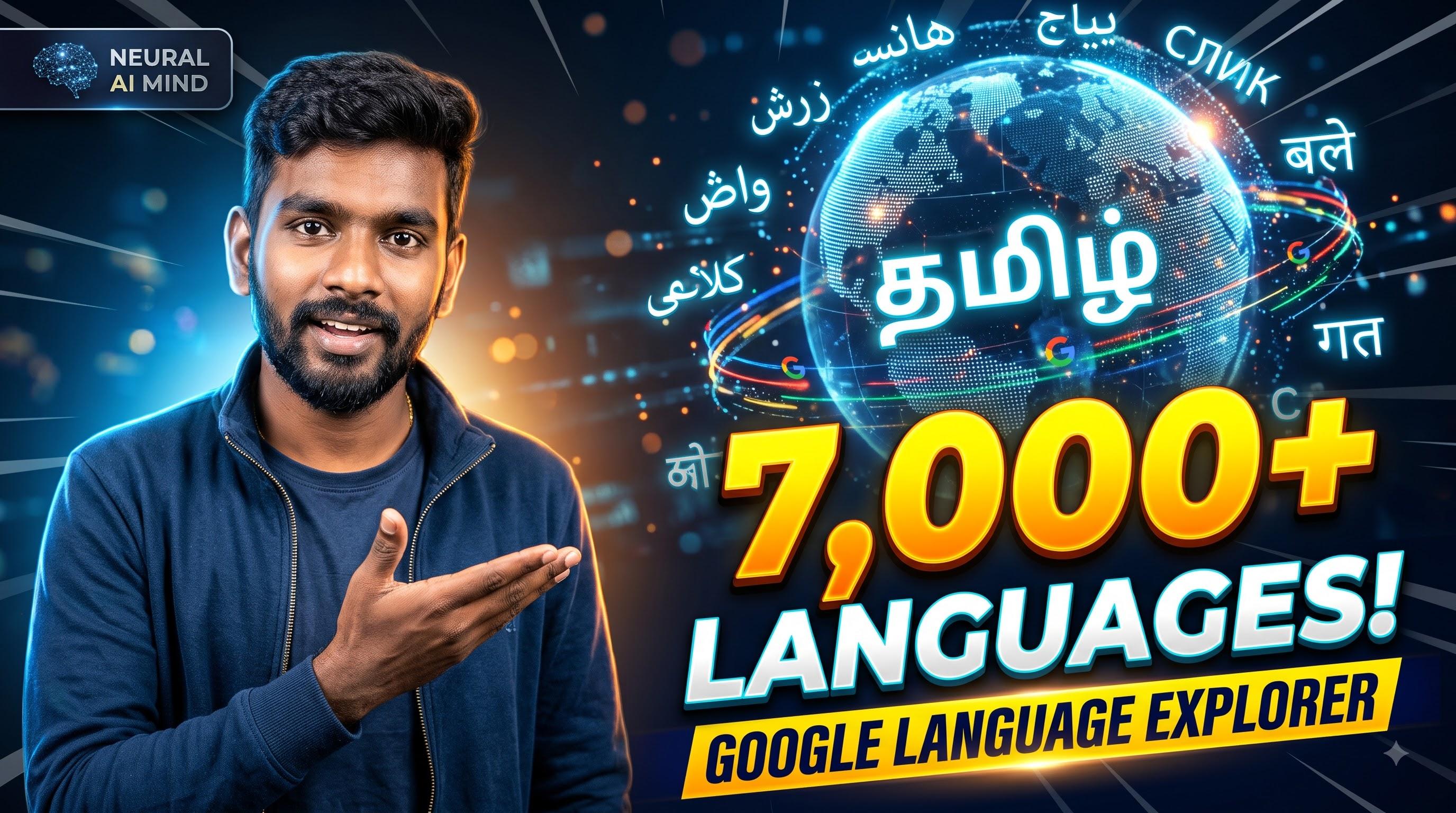
Google Research announced its Language Explorer project on November 9, 2026. The interactive platform helps users explore the world's linguistic diversity through maps, search features and detailed language information.
The project is part of Google's 1,000 Languages Initiative and is powered by LinguaMeta, an open-source language metadata dataset.
What is Google Language Explorer?
Google Language Explorer is an interactive website for exploring information about thousands of languages. Users can search for languages by name, country or region, or explore them using an interactive map.
The website provides information such as language names, writing systems, speaker estimates, geographic associations and language status.
It is important to understand that Language Explorer is not an AI translation application. Its main purpose is to make language-related information easier to discover and study.
What is LinguaMeta?
LinguaMeta is an open-source repository of language metadata. It's research paper describes a dataset that combines information from 19 sources.
The dataset includes details such as:
- Language names and identification codes
- Writing systems and scripts
- Estimated speaker numbers
- Countries and regions
- Official-language information
- Language endangerment status
The research team designed the resource to help researchers and organisations understand language coverage and plan language technology development.
Why does language data matter for AI?
AI systems that work with languages need suitable resources. Machine translation, speech recognition and text-to-speech systems all depend on language-specific data.
For example, developing better Tamil speech recognition requires more than collecting written Tamil sentences. Systems may also need diverse speech recordings, regional pronunciation, dialect variation and reliable linguistic resources.
Language metadata can help researchers understand what resources are available and where further work is needed.
Google's language initiatives in India
Google's announcement describes Project Vaani in India and Project Waxal in Africa. These initiatives work with local organisations to collect speech data for languages that are underserved by digital technology.
Google also reports that its Translate service now supports nearly 250 languages and that Gboard supports more than 900 language varieties. These are figures reported by Google.
What are the limitations?
Language Explorer should not be confused with a universal language translator.
Its current dataset focuses on living, spoken languages and excludes ancient, historical, constructed and signed languages. The website also cautions that mapping languages to geographic locations is an approximation because languages and their speakers do not necessarily follow geographic boundaries.
Some metadata may be incomplete or outdated. A language being listed does not guarantee that high-quality AI tools already support it.
What could this mean for Tamil?
For Tamil and other Indian languages, better-organised language information can support research and help identify gaps in digital resources.
However, meaningful progress also requires native speakers, language experts, community participation, good-quality datasets and careful representation of regional differences.
Google Language Explorer is a useful way to explore linguistic diversity. Its long-term value will depend on the quality of its data, continued updates and how researchers and language communities use it.
Official references
- Google Research: https://research.google/blog/exploring-the-worlds-languages-with-language-explorer/
- Google Language Explorer: https://sites.research.google/languages/language-explorer/
- LinguaMeta research paper: https://aclanthology.org/2024.lrec-main.921.pdf
- LinguaMeta GitHub: https://github.com/google-research/url-nlp/tree/main/linguameta
Research checked: 11 November 2026. Product figures and initiative descriptions attributed to Google are Google's own reported information.
